

October 8, 2026
 To meditate upon the guru is to meditate upon God. Every disciple is asked to contemplate the guru before doing anything, and thus link his consciousness with the guru's several times a day.
Krishna reveals to us that meditation is not such a rare thing. He reminds us in the Gita (II-62) that we often "meditate or contemplate objects of pleasure". Such meditation leads to self-destruction. Throughout the scripture, of course, Krishna deals with meditation for self-realization or enlightenment. Krishna points out that "Some people behold the self by the self in meditation". Here and throughout the scripture the emphasis is on 'seeing' (pasyati a pasyanti). "He who sees God or the Self in all, and all in God or the Self," is a devotee, yogi and so on. This is the way, and this was Sivananda's meditation.
We saw that Gurudev was fond of the Vibhuti Yoga of The Bhagavad Gita (10th chapter). 'See God in all'- that was his mantra. Not to think "I see God in all".
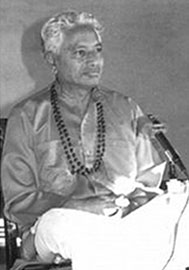
How does one know that one sees God in all? How does he who sees God in all behave? Does he see God in all except in himself? If he sees God in all, including himself, how does he function as if dualistically? This is the supreme paradox and mystery which can really and truly be understood only if we see the truth embodied in someone like Gurudev Swami Sivananda. In Him we saw clearly illustrated the twin bhavas (realization): narayana-bhava (see God in all) and nimitta-bhava (God is the indwelling reality, and the body and mind are instruments in His hands).
This attitude, this perception and this realization constitute real meditation. They cannot be practised, cultivated or applied. They have to happen - of course, by the grace of God and Gurudev.